
Asian Stock Market Loses Direction as US-Iran Truce Keeps Oil Firm and the Dollar Strong

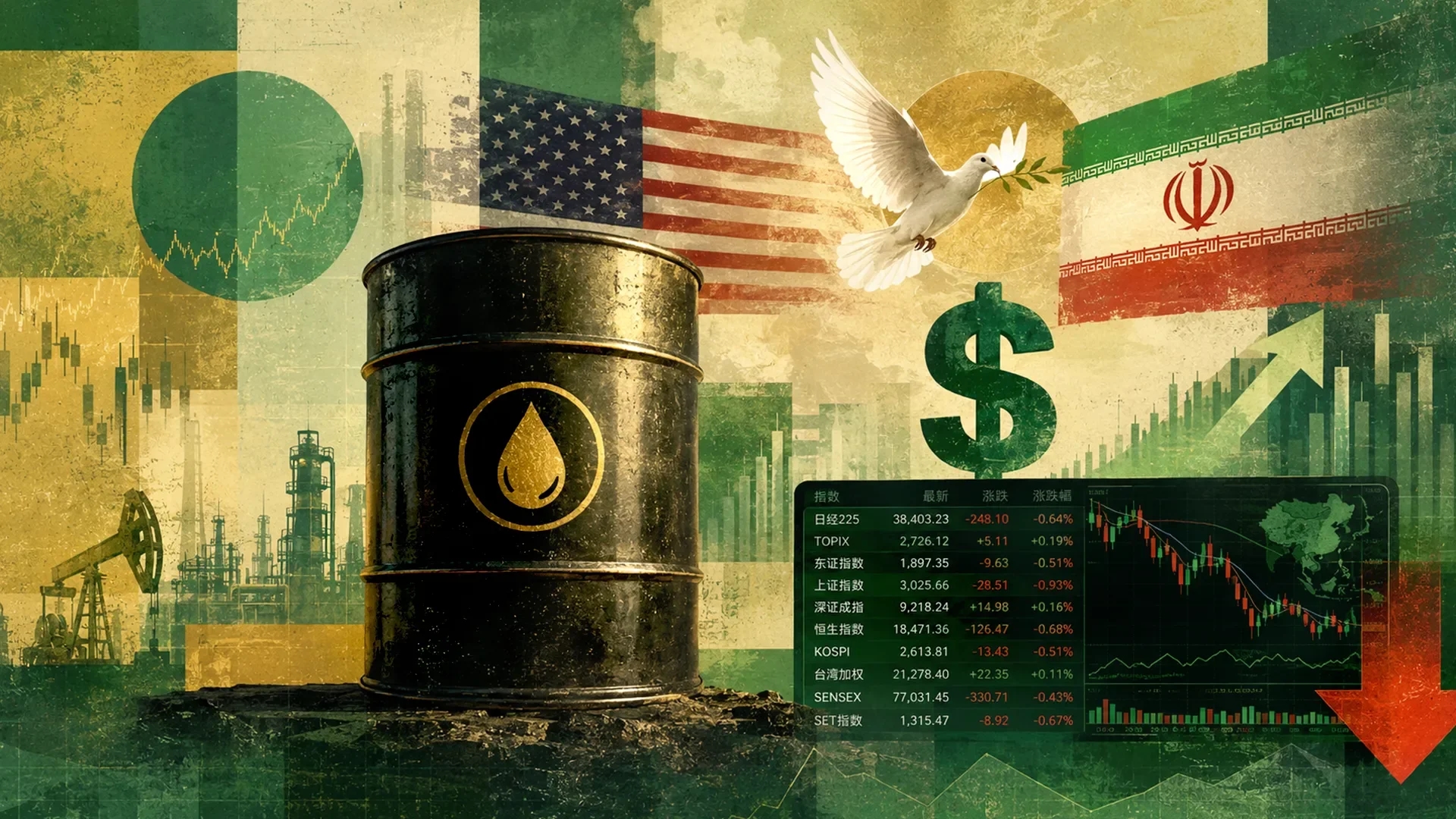
Asian stock markets stayed mixed and failed to establish a decisive direction on Monday after Washington and Tehran consented to suspend a renewed round of hostilities. Oil prices stayed high, and many traders now expect the US to raise interest rates. That kept the dollar near its highest level in a year and left traders feeling cautious.
- South Korea's KOSPI fell almost 2%; Japan's Nikkei dropped 1%
- The MSCI Asia-Pacific index (a wide measure of regional stocks) slipped 0.4%
- US S&P 500 and Nasdaq futures rose 0.4%; European futures gained 0.2%
- Brent crude oil rose 0.85% to $72.60; US WTI oil rose past 1% to $70.01
- The dollar index sat at 101.33
What are Moving the Stocks?
The careful mood comes after several days of back-and-forth attacks. These started when an Iranian missile hit a cargo ship in the Strait of Hormuz last week, and both sides blamed each other for breaking the ceasefire.
A 14-point peace deal signed on 17 June was meant to end the fighting and reopen this key shipping route. But the new clashes have made investors nervous. Worries about whether the deal will hold kept oil prices up, even though oil has now given back almost all of the gains it made during the conflict.
Trump said on a Truth Social post,
“United States aircraft just struck Iranian missile and drone storage locations, and coastal radar sites, for violating the Cease Fire Agreement, AGAIN!”
Tech stocks added more worry. Many investors think the prices of AI (artificial intelligence) companies have risen too high. So some are moving their money out of big tech and into smaller, steadier companies. The Bank for International Settlements also warned that today's heavy spending on AI could end in the same boom-and-bust pattern seen in the past.
Senior Economist at Interactive Brokers, Jose Torres, said,
"For this reason, traders have gravitated toward the defensive and cyclically oriented areas of the equity space in recent weeks."
Also, read how Gold rebounded back above $4,300.
Technical and Market Trends
The strong dollar is the main story. The dollar index stayed at 101.33, just below its one-year high. The Japanese yen was weak at about 161.77 per dollar, close to its lowest in 40 years, which could push Japan to step in and support it.
Gold fell 0.4% to $4,072 an ounce and is heading for a 13% drop this quarter, its biggest fall since 2013. Rate bets have flipped fast: traders now expect at least one US rate hike this year, instead of the two cuts they expected before the conflict. Some even expect three.
What This Means for Traders
For traders, this is a news-driven market. Prices can swing fast on any update from the Middle East or on interest rates. Many traders are keeping a close eye on oil and the dollar, because both are steering how much risk people want to take across stocks, gold, and currencies.
On a quiet day with no clear trend, it is often better to wait than to rush into trades. Careful risk management and a close watch on key support and resistance levels matter more than usual until the direction becomes clearer.