



What Is a Crypto Coin? How It Works vs. Tokens

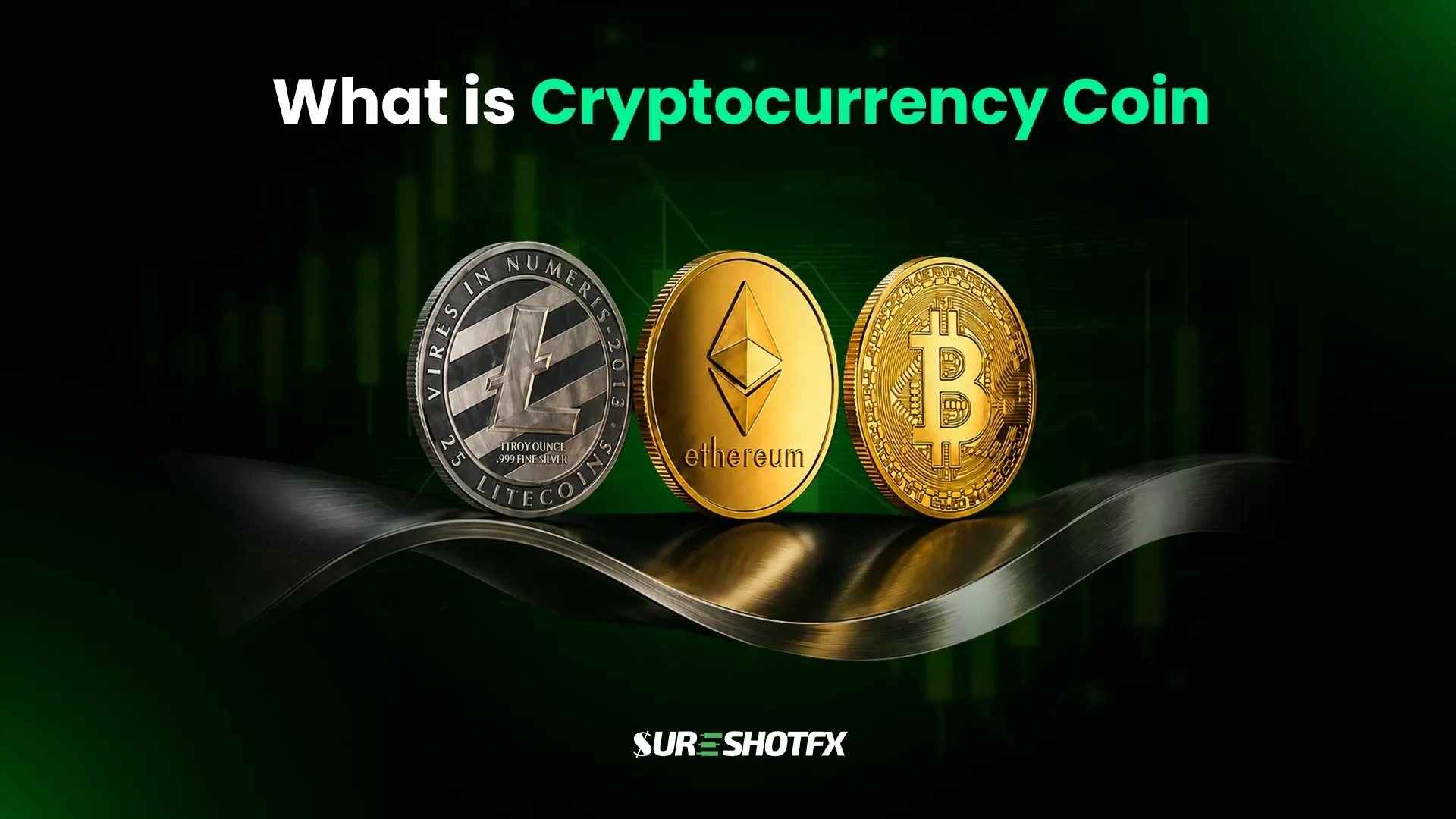
Bitcoin, Ethereum, Solana, and Dogecoin are examples of cryptocurrency coins. USDT and USDC are different: they are tokens issued on existing blockchain networks.
So, what is a cryptocurrency coin?
A cryptocurrency coin is a digital asset native to its own blockchain. It can be used to transfer value, pay network fees, and, depending on the blockchain, participate in securing the network. But tokens are different and do not have their own blockchain.
However, this guide explains how cryptocurrency coins work, how they are created, how coins differ from tokens, where they are stored, and what determines their value.
What is Cryptocurrency Coin?(Quick Answer)
A cryptocurrency coin is a digital currency with no physical existence. Unlike native currency coins, it is a kind of digital asset that runs on its own blockchain, where it acts as the native money used for transaction fees and rewards validators. All trades under cryptocurrency coins are decentralized and need no bank to move.
The world’s first and most valuable crypto coin is Bitcoin (BTC), launched in 2009. Other popular crypto coins include Ethereum (ETH), Solana (SOL), Ripple (XRP), etc.
- A crypto coin is a digital asset native to its own blockchain.
- Tokens use an existing blockchain rather than operating their own blockchain.
- New cryptocurrency coins are created by mining or staking under protocol rules, not by any single company.
- Roughly 741 million people owned crypto by the end of 2025.
- You can easily buy a crypto coin with the help of a broker account and store it in a certain storage method- a hot or cold wallet.
How Does a Cryptocurrency Coin Work?
A cryptocurrency coin works by recording every transaction on a blockchain network that records, validates, and secures transactions without relying on a central bank or single controlling authority. As mentioned above, a crypto coin is decentralized; no government or security can control the transactions.
When you send a crypto coin:
A Transaction Is Initiated
When you send cryptocurrency, your wallet creates a transaction. It includes the amount and the recipient's blockchain address. Your private key is used to sign the transaction. This signature proves that you are authorized to spend the coins.
The Network Verifies the Transaction
The transaction is broadcast to the blockchain network. Independent computers called nodes check the transaction. They verify the digital signature and available balance. If the transaction follows the network's rules, it can move forward.
Transactions are Added to a Block
Valid transactions are grouped together into a block. The blockchain's consensus mechanism helps decide which block is added. Bitcoin uses Proof of Work for consensus. Ethereum uses Proof of Stake.
The Blockchain Records the Transaction
Once a block is accepted, it becomes part of the blockchain. The transaction is then recorded in the network's shared ledger. New blocks are added after it over time. This makes changing past transactions increasingly difficult.
The Coin Remains Recorded on the Network
A cryptocurrency coin is not physically stored inside your wallet. Instead, the blockchain records the relevant ownership or account state. Your wallet stores or manages the private keys needed to access and spend the coins.
In simple terms: A cryptocurrency coin works through three main processes: the blockchain records transactions, nodes verify them, and consensus helps the network agree on the valid transaction history.
How is Cryptocurrency Different from Traditional Money?
Crypto is decentralized and settles in minutes; traditional money is issued by central banks and can take days to wire. Crypto transactions are final and cannot be reversed, and prices swing far more sharply than fiat currencies.
Regarding the downsides, conventional banking and currency markets move by a fraction of a percent, but crypto coin prices fluctuate around 5% daily or sometimes more.
Though cryptocurrency coins are not centralized, recently, on May 29, 2026, the CFTC and SEC approved Bitcoin perpetual futures, the most traded cryptocurrency coin, enabling an opportunity for domestic customers to trade cryptocurrencies.
Unlike traditional transactions, cryptocurrency coins are fungible. The value of a coin remains the same when bought, sold, or traded. However, the price value depends on the demand and supply of the coin.
Are Crypto Coins and Tokens the Same?
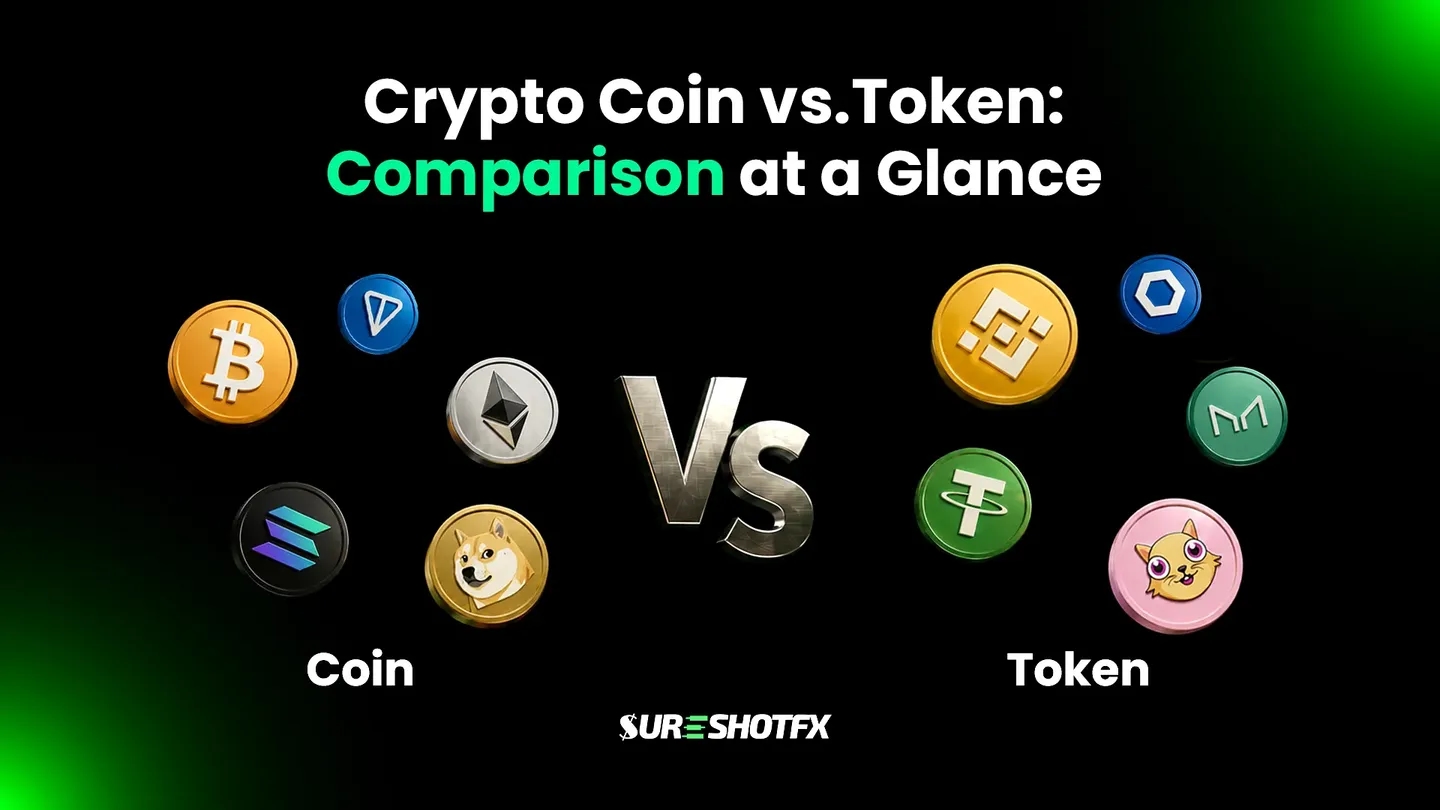
No, crypto coins and crypto tokens are two different things, and the blockchain is the difference. When it runs on its own native blockchain, it is a crypto coin. But if it is run on another chain or network, it is a crypto token.
What is a crypto token?
A token is a blockchain-based digital asset that does not have its own independent blockchain. Instead, it is issued and operated using an existing blockchain's infrastructure. This type of blockchain is also called a ‘Layer 1’, the base blockchain (e.g., Solana, Ethereum); tokens are built on top of it using smart contracts.
For example, inside the Solana network, various decentralized applications, services, non-fungible tokens (NFTs), utility tokens, and games are created, known as crypto tokens. Each of them serves individual purposes but exists on the same Solana blockchain.
Tether (USDT), Chainlink (LINK), The Graph (GRT), etc, are some popular crypto tokens built on different layer 1 blockchains. Besides, Ethereum's ERC-20 documentation provides a good primary-source foundation for explaining fungible tokens and token standards.
What are the Differences between Cryptocurrency Coins &Tokens
The main difference between a coin and a token in cryptocurrency is the blockchain network- which is shared in tokens and coins have their native blockchain. The table below highlights all the differences.
Crypto Coin vs.Token: Comparison at a Glance
| Feature | Cryptocurrency Coin | Cryptocurrency Token |
|---|---|---|
| Blockchain | Own blockchain | Uses existing blockchain |
| Infrastructure | Operates its own network | Relies on host blockchains |
| Native Asset | Yes | No |
| Creation Process | Requires a cryptographic chain or network protocol | Can be created using existing standards or smart contracts |
| Transaction Fees | Usually paid in the network's native coin | Often paid using the host blockchain's native coin |
| Launching Cost | Higher | Comparatively lower |
| Use Case | Digital payments, network fees, staking, value transfer | Utilities, governance, stablecoins, software applications, digital assets |
| Examples | BTC, ETH, SOL, BNB | USDT, USDC, LINK, GRT |
What are the Popular Types of Cryptocurrency Coins?
Though Bitcoin (BTC) is the most popular, there are more. Coins fall into groups by purpose: store-of-value pioneers, smart-contract platforms, stablecoins, exchange and utility coins, meme coins, and privacy coins.
Cryptographic Store of Value & Pioneer Types-
These coins are built to hold or transfer value securely on a decentralized network.
- Bitcoin (BTC): The very first decentralized digital currency, functioning primarily as a secure digital payment. After its launch in 2009, the price is now $63,606.75 as of August 2026, up from $0.06 in July 2010, making it the largest crypto coin.
- Litecoin (LTC): An older alternative coin designed for faster peer-to-peer daily transactions.
Smart Contract & Infrastructure Coins-
These coins empower other platforms and tech that other apps and tokens are built on.
- Ethereum (ETH): Powers decentralized applications (dApps) and programmable smart contracts. Ethereum price is now $1,902.84 as of August 2026, up from $2.83 in August 2015.
- Solana (SOL): Known for extremely fast transaction speeds and low operational fees.
- Cardano (ADA): Uses an energy-efficient proof-of-stake system focused on security and scalability.
Stablecoins-
To limit or stabilize the asset to avoid market volatility.
- Tether (USDT) & USD Coin (USDC): Digital currencies that mirror traditional government currencies like the U.S. Dollar to avoid market swings.
Exchange and Utility Coins-
Used to pay fees and access services within a specific platform or network.
- Binance Coin (BNB): Used to pay transaction fees and access services within the Binance network. BNB coin is traded now at $604.06 per coin in August 2026,
Meme Coins-
Built for different communities, viral internet trends, and cultures.
- Dogecoin (DOGE): Started as an internet joke but grew into a heavily traded asset driven by community culture.
- Official Trump (TRUMP): Created to connect political support with web technologies. Officially owned by Donald Trump’s media and business brands.
Privacy Coins-
Used for hiding transaction details for anonymity.
- Monero (XMR) & Zcash (ZEC): Use cryptography to obscure sender, receiver, and amounts.
DeFi / Financial Tokens-
Decentralized Finance, used to control decentralized trading, lending, and staking services.
- Uniswap (UNI), Aave (AAVE), Lido (LDO): Power exchanges, lending markets, and liquid staking.
Service & Media Tokens-
Used for decentralized storage, computing, NFTs, and gaming.
- Filecoin (FIL), Render (RNDR), Axie Infinity (AXS): Pay for storage, computing power, and play-to-earn gaming.
How Many Cryptocurrency Coins are There?
According to CoinGecko, it tracks roughly 19,000 cryptocurrencies, but only a small fraction are true coins with their own blockchain- used as a medium of digital payment. However, most are tokens used for infrastructure development.
CoinGecko research also shows that around 25.2 million crypto coins and tokens were listed, among which 13.4 million have completely stopped being traded and about 11.6 million coins died in 2025 alone.
Any new coin marketed as the hot coin is far more likely to be a token and likely to be gone within a year. So, only a few coins like BTC and ETH have a market value.
How are Cryptocurrency Coins Created?
Crypto coins are created through mining or staking. The mining process uses a programming language. Mining does two jobs at once: it checks that transactions are real, and it creates new coins as a reward. Crypto miners use powerful computers to solve difficult cryptographic puzzles, and solving these puzzles is what produces new coins.
Cryptocurrencies run on blockchain technology. So, once a crypto miner solves a puzzle and most of the other computers on the network agree the block is genuine, the block is added to the blockchain permanently.
If you fork Bitcoin's code and launch a new independent blockchain with its own native asset, you've created a coin, not a token. To create a new crypto coin, you must create a blockchain infrastructure.
Bitcoin currently creates a block subsidy of 3.125 BTC per block. With roughly 144 blocks produced per day on average, that corresponds to approximately 450 newly issued BTC per day, before accounting for changes in actual block intervals.
That said, Bitcoin uses mining through Proof of Work, while Ethereum uses Proof of Stake and issues ETH according to its protocol rules.
Where are Cryptocurrency Coins Stored?
Crypto coins are stored on a decentralized ledger called a blockchain. These blockchains are publicly available online through private/ public keys. These keys are the one thing that you store safely inside crypto wallets or exchange wallets.
Crypto wallets are mainly of two types: hot wallets and cold/ hardware wallets. Online exchange platforms like Coinbase are responsible for managing the hot wallets to secure the private keys. MetaMask has over 100 million users, and Trust Wallet has around 200 million coins stored, as of June 2026.
Software or hardware tools connected to the internet are used as cold wallets, where you are solely responsible for managing and backing up the keys.
What is Coin Burn in Cryptocurrency?
Cryptocurrency coin burn is the process of removing or deleting a crypto coin. In this process, a crypto coin is permanently removed from circulation by sending it to an address that no one can ever access.
Every burn transaction is recorded on the public blockchain ledger so that anyone can verify the token removal. Some modern crypto tokens use automated code inside the smart contracts for a coin burn whenever a transaction happens.
What is the Cryptocurrency Coin Worth?
Each cryptocurrency coin has an individual value, so there is no single price for a crypto coin. From time to time, the value of each cryptocurrency coin changes based on the supply and demand rate. According to Forbes, the Crypto market price in August, 2026–
Bitcoin dominance was around 56.8%, with a nearly $2.29 trillion global crypto market cap and $45.20 billion in trading volume. And Forbes is now tracking 18,483 cryptocurrencies as of August, 2026 data.
Are Cryptocurrency Coins Safe?
Yes, most of the blockchains are proven safe and durable, and Bitcoin’s record is a successful one. The safety concerns sit at the edges: exchanges, wallets, and users.

The core technology behind any cryptocoin uses advanced cryptography and computerized protocols. Though these setups are decentralized and protected with keys, unlike traditional banking security, crypto coins do not come with government insurance or support.
And the most concerning thing about crypto coins is that a transaction that is done completely can not be reversed or recovered. So, beginners, before making any transaction using or on crypto, make sure to verify everything upfront.
The Bottom Line
A cryptocurrency coin is the native asset of its own blockchain, created by mining or staking under rules enforced by code. A token is built on someone else's chain and is far easier to create, which is exactly why most failed projects are tokens.
So, if you are still confused about what a coin is in cryptocurrency, after reading this post, you will hopefully have a crystal-clear view.
However, cryptocurrency markets are volatile and can involve substantial loss. This article explains cryptocurrency concepts and does not constitute any investment advice. But if you plan to start cryptocurrency trading, you can try SurreShotFX crypto trades on Telegram. The daily trade ideas shared here are free of cost and ideal for beginner crypto traders.
Got questions regarding cryptocurrencies? Contact the SSF Crypto support team, active 24/7.
-768x432.webp&w=3840&q=75)

